Monument honours millions who did not fight in WWII – but whose roles were vital to war effort
In the pouring rain, Nicola Pickett wiped a tear from her eye as she stared up at a 12-foot (3.7m) monument that finally gave recognition to her father, Job.
“This means the world,” she told me.
An imposing steel sculpture of a Black Country chain maker, stands at the edge of a churchyard in Cradley Heath.
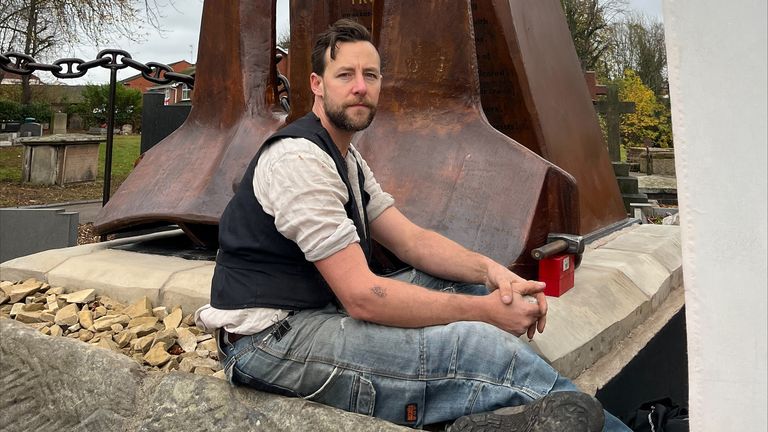
Mr Perry’s grandfather, Eric, made chains for the navy’s warships
It commemorates millions of people who weren’t allowed to fight in the Second World War because their jobs at home were too important.
Nicola’s dad had been a miner in the war. She said, “he was a bit embarrassed because all of his brothers went to war and for years he wondered if he was appreciated for what he did”.
I caught up with West Midlands-based sculptor Luke Perry before the monument was unveiled on Remembrance Sunday, finding him hammering another name into the artwork’s base.
People keep coming up to him to say they also had a relative known as a “reserved occupationist”, and they’d like to have them remembered.
Luke’s grandfather, Eric, was one.
He made chains in the war, which helped to power the Royal Navy’s warships.
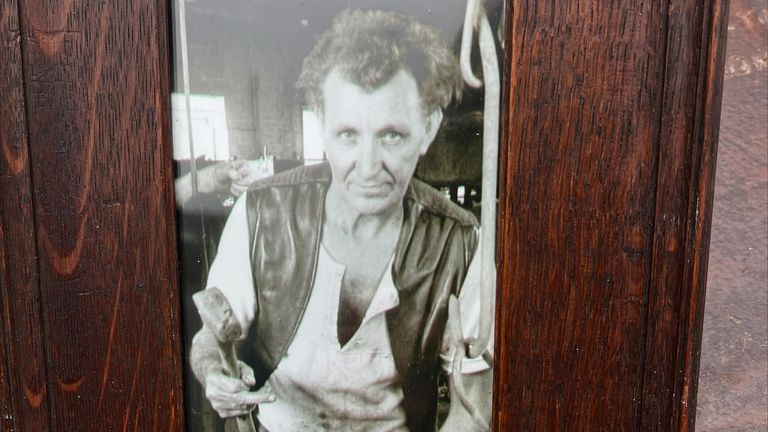
Mr Perry drew inspiration for the statute from his chain maker grandfather Eric Attwood
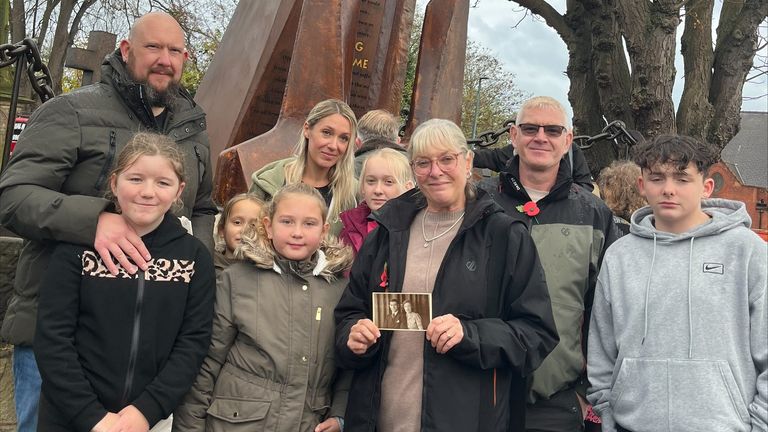
Nicola Pickett, centre, and her family
“There was a very complicated set of feelings going on,” Luke said.
“He never said he wanted to fight necessarily, but I think he did say that he perhaps should have gone and that sense of duty was very heavy to that generation, and that is what they carried for their lives.”
A man called Harry taps me on the shoulder to show me a black-and-white photo of his dad, also called Harry. “There he is, seventh from the left,” he says as he points him out.
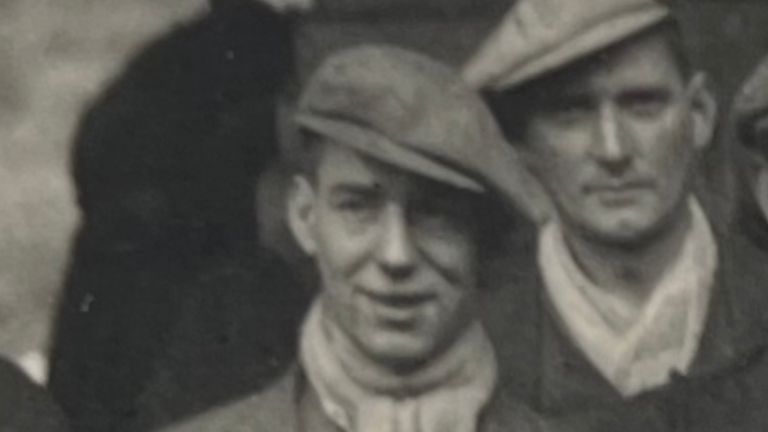
Harry Taylor
His dad also made chains, but had wanted to go to war.
“I knew he felt guilty about it because my mum told me when he went to join up they refused him… and I felt a little bit guilty too because I had friends whose dads were in the war.”
Read more on Sky News:
King leads Remembrance Sunday silence
Hero rail worker regains consciousness
BBC bosses resign
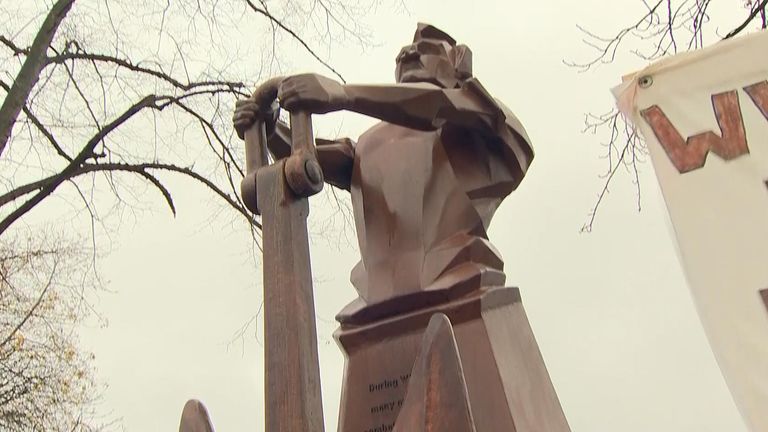
Luke Perry’s sculpture of a wartime chain maker
A lady named Jen called me over to show me her dad’s old business card.
Leslie, she said, had been an accountant for a bus company transporting workers during the war and couldn’t be conscripted.
She said some people had suggested he was a “conscientious objector” because he wasn’t fighting.
“It hurt him, it really did, because his brother luckily survived. He did come back, but it sort of caused a bit of unrest in the family as to why the elder son couldn’t go to war.”