Israel Heads to the Polls With Eisenkot Leading and Neither Bloc Near a Majority
Final polls before Israel's October 27 election put Gadi Eisenkot's Yashar ahead of Likud, but neither bloc reaches the 61 seats needed to govern.
Key takeaways
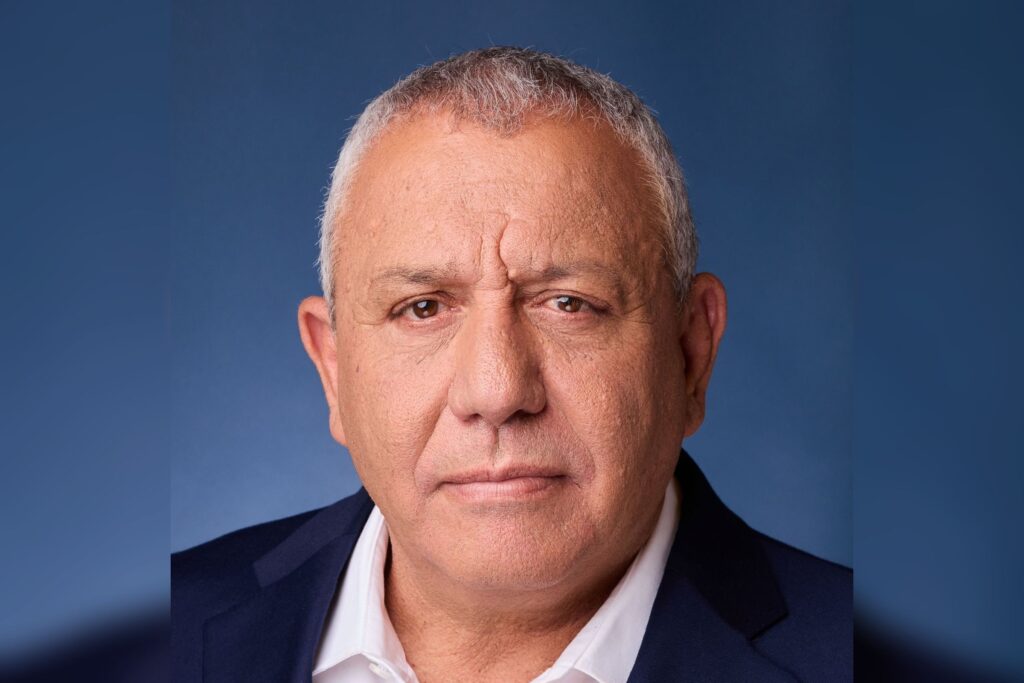
- Gadi Eisenkot’s Yashar party leads Benjamin Netanyahu’s Likud in all three final television polls, with 22 or 23 seats against 19 to 21.
- None of those polls gives either the opposition bloc or Netanyahu’s bloc the 61 seats needed for a majority, which could leave Arab-led parties pivotal.
- Small lists hovering near the 3.25 percent threshold could shift seats between the two camps once votes are counted.
Israelis vote on Tuesday, October 27, to elect the 26th Knesset, the country’s 120-seat parliament, and the last television polls before the ballot point to a change at the top of the table but not to a clear winner. Former military chief Gadi Eisenkot’s Yashar party leads Prime Minister Benjamin Netanyahu’s Likud in every one of the final surveys, yet neither the opposition bloc nor Netanyahu’s allies are projected to reach the 61 seats needed for a majority.
About 7.3 million people aged 18 and above are eligible to vote, according to Israel’s Central Elections Committee. It is Israel’s sixth national election since 2019, but the first in 38 years to arrive at the natural end of a full Knesset term, and the outcome is likely to be settled less by who finishes first than by who can assemble a coalition afterwards.
What the Final Polls Show
Three television surveys published on Friday by the public broadcaster Kan 11, Channel 12 and Channel 13 all put Yashar first. Kan 11 and Channel 13 gave it 22 seats and Channel 12 gave it 23. Likud followed with 20, 21 and 19 seats respectively, and former prime minister Naftali Bennett’s B’Yachad, or Together, came third with 14, 15 and 14.
All three networks projected Netanyahu’s right-wing and religious bloc at exactly 50 seats. The opposition’s so-called change bloc received 52 seats in Kan 11’s survey, 56 in Channel 12’s and 54 in Channel 13’s. The Arab parties, which are not counted in either bloc, were projected to win between 14 and 16 seats.
A final Maariv poll put the change bloc at 54 seats and Netanyahu’s bloc at 48, with Yashar unchanged at 21 and Bennett’s list up two seats to 15. The Jerusalem Post’s average of four weekend polls, from Channel 12, Channel 13, Channel 14 and Maariv, gave Yashar 22 seats against 19.75 for Likud, and the opposition 54 seats against 49.5 for Netanyahu’s bloc, a gap of 4.5 seats.
Yashar’s lead predates the final polls. A Walla poll conducted on October 19, after Benny Gantz’s Blue and White party withdrew from the race, had Yashar at 23 seats and Likud down one to 19, a four-seat gap that the final television surveys narrowed to two or three. That survey of 601 respondents carried a maximum sampling error of 4 percent, wide enough that single-seat changes should be read with caution. It also found that 45 percent of respondents were completely certain of their choice, with certainty higher among coalition voters, at 54 percent, than among opposition voters, at 35 percent.
Israel’s Election at a Glance
Voting takes place on Tuesday, October 27, for the 120-seat Knesset, with 61 seats needed for a majority. About 7.3 million people aged 18 and above are eligible to vote. Parties need 3.25 percent of the vote to enter parliament. Coalition talks can last 28 days, with a possible 14-day extension.
The Threshold Fight Among Smaller Parties
Seats are shared out in proportion to each party’s share of the national vote, but only parties that clear a 3.25 percent threshold enter parliament, and votes for those that fall short are discarded. That rule makes a handful of small lists among the biggest variables in the race.
Former general Ofer Winter’s People of Israel party fell below the threshold in all three Friday television polls, with 2.9 percent in Kan 11’s survey, 2.5 percent in Channel 12’s and 3.1 percent in Channel 13’s. The joint Reservists-Economic Party, led by former minister Yoaz Hendel and economist Yaron Zelekha, won four seats in Kan 11’s poll but fell below the line in the other two, at 2.4 percent and 3.0 percent.
In The Jerusalem Post’s four-poll average, the Hendel-Zelekha list stood at 3.10 percent, 0.15 percentage points below the threshold, while Winter’s party averaged 2.88 percent. Depending on which lists fall short, the redistribution of seats among the parties that qualify could alter the balance between the rival camps, Ynet noted.
How a Government Gets Formed
Israelis vote for a party, not a candidate, and no party has ever won a 61-seat majority outright. After the vote, parties have 28 days, with a possible extension of up to 14 days, to assemble a coalition that reaches 61. If nobody manages it, the country votes again. Whatever happens, Netanyahu stays on as caretaker prime minister until a new government is sworn in.
Four major Jewish-led opposition parties have signed a declaration promising not to attack one another before the vote and to join forces in forming a government afterwards. Alongside Yashar, the alliance includes the Together list of former prime ministers Naftali Bennett and Yair Lapid, Avigdor Liberman’s Yisrael Beiteinu and Yair Golan’s Democrats, and Eisenkot is viewed as its most likely candidate for prime minister.
That arithmetic gives the Arab-majority lists, Ra’am and the Joint List, a potentially decisive position. The Central Elections Committee had voted to bar both from the election, but the Supreme Court unanimously overturned the bans on October 2. Most leaders of the Jewish-led opposition bloc have ruled out joining forces with them, Al Jazeera reported.
President Isaac Herzog has said he will do everything he can to prevent repeat elections. In an interview with the daily Yedioth Ahronoth, reported by Anadolu Agency, he declined to endorse any particular coalition and urged Israelis to vote, saying: "Elections are not a civil war."
That rule makes a handful of small lists among the biggest variables in the race.
The Issues Behind the Vote
The campaign has been fought over a long list of security and domestic questions. Three years after the Hamas-led attack of October 7, 2023, in which some 1,200 people were killed and about 250 taken captive, the government has yet to form a state commission of inquiry into the security failures of that day.
Exemptions from military service for ultra-Orthodox students, Netanyahu’s push to curb the Supreme Court’s powers, and the conflicts in Gaza, the occupied West Bank and Lebanon remain divisive. So does the cost of living: Israel’s defence budget has doubled since 2023, increasing pressure on public finances while households contend with high prices and modest wages.
Netanyahu, the longest-serving prime minister in Israel’s history with 19 years in office across three stints, is seeking another term while standing trial on corruption charges, which he denies. He has been on trial since May 2020 on charges of bribery, fraud and breach of trust in three cases, and in November 2025 he formally requested a presidential pardon from Herzog. Herzog has said the case should be brought to an end through a plea agreement.
A Long Run of Unstable Parliaments
The vote follows years of political instability. In April 2019, Likud and Gantz’s Blue and White tied on 35 seats each, and a second election that September again produced deadlock. A third vote in March 2020 led to a Netanyahu-Gantz unity government that collapsed within a year.
After the March 2021 election, an eight-party coalition led by Bennett and Lapid, which included Ra’am, ended Netanyahu’s 12-year run, but it lasted only a year. Netanyahu returned in November 2022 at the head of what has been described as Israel’s most right-wing government. When parliament dissolved in July, his coalition held 60 of the 120 seats and the opposition held 59.
With every final poll showing both camps short of a majority, the decisive question after October 27 is less which party finishes first than which leader can bring together 61 lawmakers. With up to 42 days allowed for coalition talks, the shape of Israel’s next government may take weeks to emerge.
Sources
- Israel’s elections 2026 explained in maps and charts, Al Jazeera
- Final Israel election polls put Eisenkot’s Yashar ahead of Likud, but neither bloc wins a majority, Ynetnews
- Eisenkot leads Netanyahu but deadlock looms, election polls show two days before Israelis vote, The Jerusalem Post
- Eisenkot extends lead over Netanyahu in new poll, but neither bloc reaches majority, The Jerusalem Post
- Israeli president warns election tensions could deepen divisions, Anadolu Agency
Related coverage: Six smugglers jailed for manslaughter over worst Channel small boats disaster · Huge crowds greet Pope in Paris ahead of open-air Mass

Follow Billboard Lifestyle on Instagram for the day’s stories in music, fashion and culture.
Follow us