

Beyond Silicon: Why Dr. Ko-Cheng Fang’s LongServing Technology Believes the Future of Artificial Intelligence, Clean Energy, and Global Computing Power Runs on Light — Not Electricity
The artificial intelligence revolution has arrived faster than almost anyone predicted, and it has brought with it an energy crisis that the world is only beginning to confront. Training a single large language model can consume as much electricity as hundreds of households use in an entire year. Running data centers at the scale required for global AI deployment demands power infrastructure that many nations simply do not possess. As the semiconductor industry pushes electronic chips ever closer to their physical limits, the gap between computational demand and sustainable energy supply grows wider with each passing quarter. For Dr. Ko-Cheng Fang, Founder and CEO of LongServing Technology, this is not merely a technical challenge — it is a civilisational test, and he believes he has developed the material that will determine whether humanity passes it.
Dr. Fang’s credibility in making this claim rests on a track record that extends well beyond photonic chips. Early in his career, he developed patented technologies covering cloud storage systems and programmable password locks that were adopted by the United States Department of Homeland Security — contributing to the very infrastructure of secure global computing that AI now depends upon. He later became the first to successfully synthesise laboratory-grown Imperial Green jadeite at commercial grade, a feat that General Electric and leading Chinese research institutions had both attempted and abandoned. Each breakthrough followed the same pattern: a clear-eyed assessment of where existing approaches had reached their limits, followed by a willingness to pursue a fundamentally different direction.

In photonic computing, the physical constraint is wavelength. Silicon photonics operates at wavelengths between 1,300 and 1,500 nanometers — far too large for the nanoscale circuits of modern chips. To build photonic circuits at chip scale, one needs a material that emits and controls photons at wavelengths approaching the X-ray range. Dr. Fang’s X-Photon material achieves exactly this, emitting light at just 2 nanometers. When verified through Raman spectroscopy and X-ray diffraction, the results matched no existing spectrum in scientific databases — a genuinely new material. Photonic chips built on X-Photon technology operate at least 1,000 times faster than conventional semiconductor chips, while significantly reducing energy consumption, lowering carbon emissions, and offering strong resistance to electromagnetic interference. Patent protection spans 26 countries.

The photonic gate architecture at the heart of this system encodes binary data through the controlled transmission and blockage of photons across a semi-photoresist barrier. Data access is achieved through photoelectric conversion, operating at scales and speeds that no previous photonic technology had reached. Dr. Fang has also completed the development of a 7-nanometer photomask for photonic chip fabrication — a milestone that moves the technology from laboratory verification toward production-ready manufacturing in partnership with existing semiconductor foundries.
Beyond the chip itself, Dr. Fang is advancing photonic memory — a technology that fundamentally eliminates the repeated light-to-electrical and electrical-to-light conversions that currently create bottlenecks in hybrid computing systems. Photonic memory enables data buffering and temporary storage within the photonic domain, removing the conversion losses that limit hybrid architectures. The foundation of this breakthrough is X-Photon: without this material, Dr. Fang has stated plainly, such advancements would not be possible for humanity. Combined with photonic chips, this memory system is projected to reach computational speeds at least 10,000 times faster than current electronic CPUs.

The environmental implications are equally significant. X-Photon materials are mass-producible, non-toxic, and environmentally safe — a deliberate contrast to the compound semiconductors currently used in advanced electronics, many of which carry significant toxicological concerns during production and disposal. Dr. Fang’s biotechnology research reflects the same environmental ethic: natural plant extract compounds, certified under EU organic standards, are being developed as antiviral and anti-cancer agents that work with the body rather than against it. LongServing Technology welcomes hospitals and research institutions to collaborate on clinical trials and further research exchange across both its computing and biomedical platforms.

LongServing Technology’s commercial strategy for photonic chips is deliberately collaborative. Rather than competing directly with established foundries, Dr. Fang proposes a dual-track model in which existing manufacturers adopt photonic processes alongside their current electronic lines, enabling a managed transition without disrupting existing markets. For nations currently unable to participate fully in the AI economy due to power infrastructure constraints, photonic chips represent a path toward inclusion. For the global climate, replacing even a portion of today’s energy-intensive electronic computation with photonic alternatives would represent a meaningful reduction in carbon output. The era of computing on light is no longer theoretical — it has a material, a design, a strategy, and a builder.
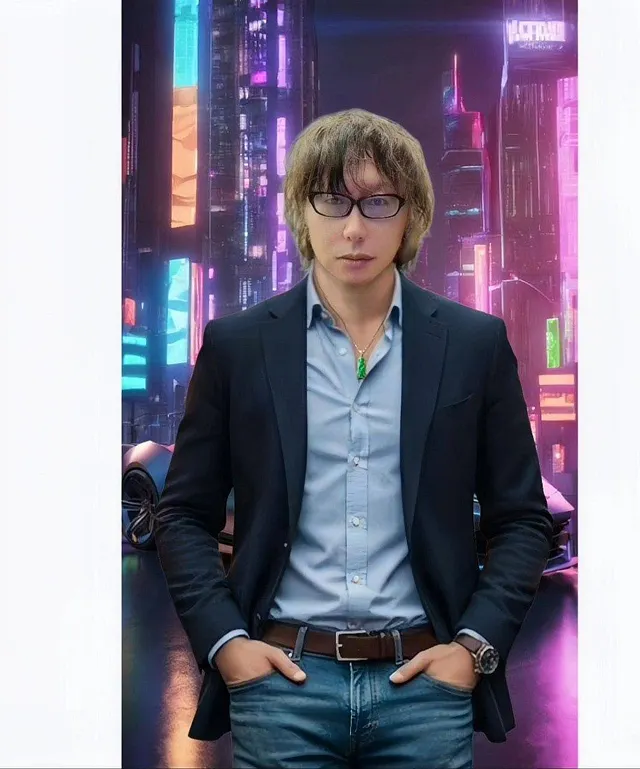
Dr. Ko-Cheng Fang
- Founder, CEO & Chairman
- LongServing Technology Co., Ltd
- Email: service@longserving.com.tw
- Website: https://longserving.com.tw/en/
- Instagram: @ko_cheng_fang_david
